
Bringing Home a Bernedoodle Puppy: Your First Week Together
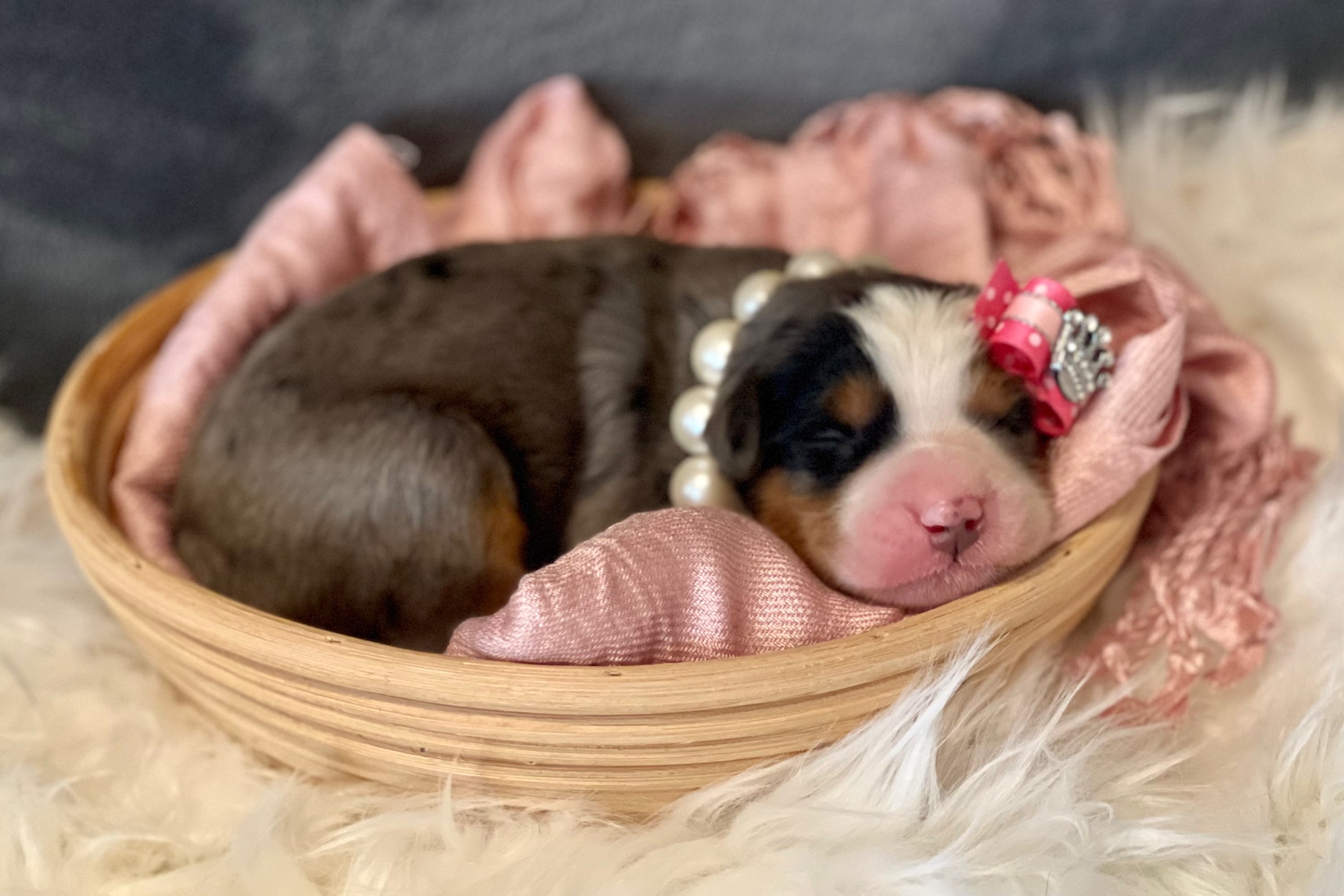
Bringing home a Bernedoodle puppy is exciting, but the first few days can also feel like a big adjustment—for both you and your puppy.
Your puppy is leaving behind the environment, routines, people, and littermates they have known and entering an entirely new world. New smells, sounds, rooms, people, expectations, and sleeping arrangements all arrive at once.
At O’Hearon’s Amazing Puppies, we believe a successful transition starts before go-home day. Our puppies are raised with intentional handling, socialization, enrichment, and age-appropriate experiences designed to help build confidence and prepare them for family life.
But go-home day isn’t the end of that development. It’s the beginning of the next stage—and what happens during your puppy’s first week at home can help set the tone for the months ahead.

Bringing Home a Bernedoodle Puppy: Prepare Before the First 24 Hours
You don’t need to buy every puppy product on the market. A simple, prepared environment is usually better than an overwhelming one.
Before your puppy arrives, have the basics ready:
An appropriately sized crate
A comfortable sleeping area
Food and water bowls
The food your puppy is accustomed to eating
A collar or harness and lightweight leash
Safe puppy toys and chews
Enzymatic cleaner for accidents
A designated potty area
Baby gates or another way to create a manageable puppy-safe space
Your first veterinary appointment planned
Puppy-proof the areas your puppy will use. Electrical cords, medications, household chemicals, small objects, toxic plants, and anything tempting enough to chew should be safely out of reach.
You don't need to give your puppy access to the entire house on the first day. A smaller, predictable environment can make supervision, potty training, and settling in much easier.
Go-Home Day: Keep It Simple
It can be tempting to turn puppy pickup into a celebration involving friends, family, neighbors, and every room in the house.
Your puppy may benefit more from the opposite.
Give them time to explore their new environment without overwhelming them. Introduce family members calmly and allow your puppy to approach at their own pace.
This is also a good time to begin establishing the routine you want to continue.
Take your puppy to the designated potty area when you arrive home. Praise successful potty trips and begin using the same location and routine consistently.
Then allow time for rest.
Young puppies need a tremendous amount of sleep, and an overtired puppy can sometimes look like a puppy who needs more activity—biting, zooming, barking, and struggling to settle can all become worse when a puppy is exhausted.
Your Puppy May Not Act Like Themselves Immediately
Some puppies walk into their new home as though they own it.
Others are quieter.
A puppy may eat less than usual, sleep more, hesitate to explore, whine at night, follow you constantly, or seem unsure about their new surroundings.
That doesn't necessarily tell you what your puppy's permanent personality will be.
Give them time.
The goal during the first few days isn't to expose your puppy to everything imaginable. It's to help them learn:
I am safe here. My needs are met. My people are predictable. I can explore without being overwhelmed.
That sense of security gives you a much better foundation for future training and socialization.
Establish a Predictable Daily Routine
Your first week is an excellent time to establish simple patterns around:
Potty → meals → play/training → rest → repeat.
Take your puppy outside frequently, particularly:
Immediately after waking
After eating or drinking
After active play
After training
Before going into the crate
Before bedtime
Accidents will happen. Punishment doesn't teach a young puppy where you want them to go. Supervision, management, repetition, and rewarding the correct behavior are far more useful.
The same principle applies to many early puppy behaviors: instead of waiting for your puppy to make the wrong choice, arrange the environment so making the right choice is easier.
Start Crate Training Positively
A crate should become a safe resting space—not a place your puppy only experiences when everyone leaves.
During the first week, create positive associations with it.
Offer treats or safe chews in the crate. Feed meals there when appropriate. Practice brief periods with the door closed while you're nearby. Give your puppy opportunities to nap there.
You don't need to “cry it out” indefinitely to teach independence. At the same time, immediately removing your puppy from the crate every time they make a sound can unintentionally teach them that vocalizing opens the door.
The goal is gradual, positive learning.
Continue the Development That Started With the Breeder
At OAP, we value intentional early experiences and draw from established puppy-development approaches, including concepts associated with Puppy Culture, when they fit our puppies and program.
Once your puppy comes home, you become the person continuing that work.
During the first week, appropriate experiences might include calmly hearing household sounds, walking on different safe surfaces, seeing people who look different from members of your household, gentle handling of paws and ears, short car rides, grooming practice, and observing new things from a comfortable distance.
Quality matters more than quantity.
If your puppy is frightened or overwhelmed, increasing the intensity isn't the goal. Give them distance and help them process the experience successfully.
Training Starts on Day One—But Keep It Short
You don't need hour-long training sessions.
A few minutes at a time is plenty.
Your puppy is already learning from every interaction, so begin rewarding behaviors you want to see again.
The first week is a great time to work on:
Name recognition. Say your puppy's name and reward them for looking toward you.
Coming when called. Make coming to you fun and rewarding from the beginning.
Handling. Gently touch paws, ears, mouth, collar, and body while pairing the experience with something positive.
Following you. Reward your puppy for choosing to stay engaged with you.
Settling. Calm behavior deserves reinforcement too.
This is where a structured training resource can be extremely helpful for new families. OAP families can use Bella & Baxter as a go-home training resource to help continue building good habits after their puppy leaves us.
The goal isn't to create a perfectly trained eight-week-old puppy. It's to establish communication and a positive relationship with learning.
Be Thoughtful About Public Exposure
Socialization and disease prevention both matter.
Until your veterinarian has advised you about your puppy's vaccination status and local disease risk, be thoughtful about high-traffic areas used by unknown dogs.
That doesn't mean your puppy has to live in isolation.
Safe socialization can include being carried in public, riding in the car, observing the world from a clean blanket or controlled environment, meeting healthy and appropriately vaccinated dogs you know, experiencing household sounds, and interacting with carefully selected people.
Talk with your veterinarian about balancing appropriate early socialization with infectious-disease risk in your area.
Introduce Other Pets Carefully
If you have another dog, don't assume they need to become best friends within ten minutes.
Use calm, supervised introductions and give both dogs space.
Your adult dog should have somewhere to retreat from puppy energy. Your puppy should also be protected from interactions that become too intense.
Cats may need even more time and management.
Baby gates, leashes, crates, and separate spaces are useful tools. Peaceful coexistence is a perfectly good first goal.
What About the First Night?
The first night can be difficult because your puppy has likely never slept alone in an unfamiliar home.
Keep the crate close enough that you can respond appropriately and take your puppy out for legitimate potty needs.
Keep nighttime potty trips boring:
Outside → potty → quiet praise → back to bed.
This isn't playtime.
Some whining during the adjustment period is normal. Consistency matters, but so does recognizing that you're working with a very young puppy experiencing an enormous life change.
Schedule Your New-Puppy Veterinary Visit
Even when your puppy has already received a veterinary examination and age-appropriate preventative care before leaving OAP, we recommend establishing care with your own veterinarian promptly.
Bring the health and vaccination records you received at go-home.
Your veterinarian can review your puppy's records, discuss the remaining vaccination schedule, parasite prevention, nutrition, growth, and any questions specific to your puppy.
Don't Try to Create a Perfect Puppy in Seven Days
Your first week isn't a test.
You don't need perfect crate training, perfect potty training, perfect recall, ten commands, five outings, and a puppy who sleeps through the night.
Focus on the fundamentals:
Safety. Routine. Rest. Connection. Positive learning. Appropriate socialization.
Your Bernedoodle has months and years of learning ahead.
The strongest start often comes from doing the simple things consistently rather than trying to accomplish everything immediately.
OAP Support Doesn't End at Go-Home
At O’Hearon’s Amazing Puppies, raising puppies is about more than the weeks they spend with us.
We put considerable thought into early development, health, temperament, socialization, and preparing puppies for the transition into their families. We also want our families to have useful resources for continuing that work after go-home.
That's why resources such as Bella & Baxter, along with the guidance and support families receive from OAP, can become part of the transition from breeder-raised puppy to confident family companion.
If you're preparing for an upcoming OAP puppy, start learning before go-home day. You'll be able to spend that first week enjoying your puppy instead of trying to figure everything out at once.


Comments