

What Should I Know Before Getting a Bernedoodle? 10 Things Future Owners Should Know
What to Know Before Getting a Bernedoodle: Size, Coat, Temperament & More
If you’re wondering what to know before getting a Bernedoodle, it helps to understand their size, coat, temperament, health, and what responsible puppy raising really looks like.
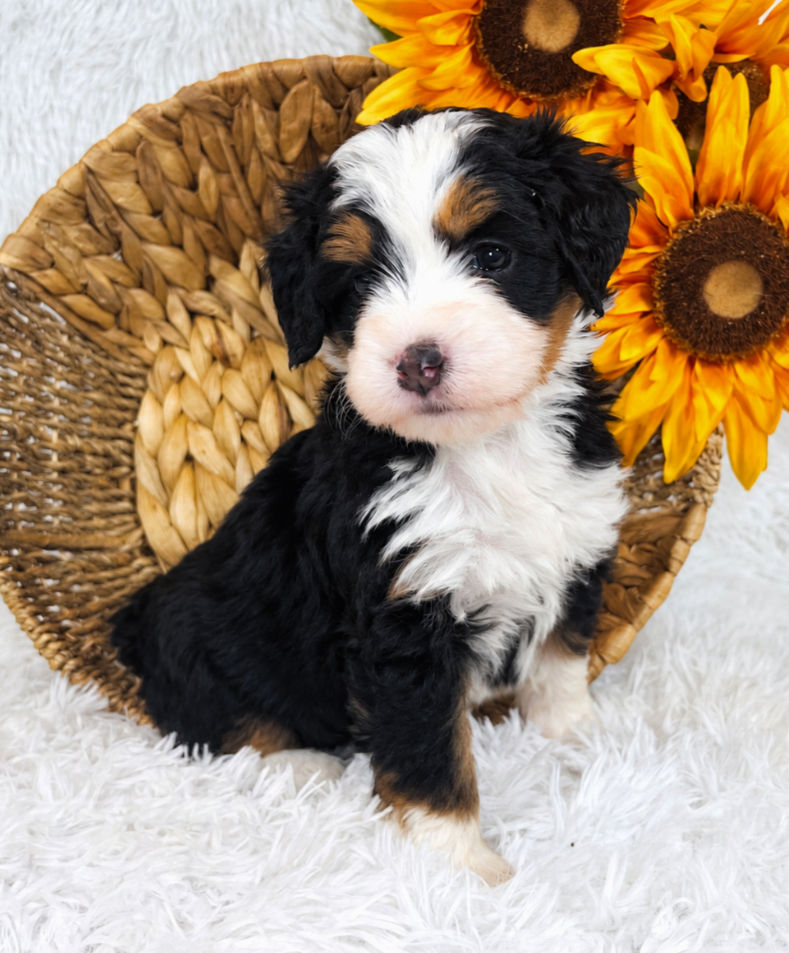
Bringing home a Bernedoodle is exciting, but choosing the right puppy involves a lot more than falling in love with a cute face, beautiful markings, or blue eyes.
Over the years, one thing I’ve learned is that families are happiest when they understand what they’re actually choosing: the breeder behind the puppy, the health and genetics behind the parents, how the puppy was raised, and what traits can—and cannot—be predicted.
At O’Hearon’s Amazing Puppies, I want families to feel informed before they ever place a deposit. Here are ten things I believe every future Bernedoodle owner should know.
1. “Health Tested” Should Mean More Than a Sentence on a Website
One of the first things I look for in any breeding program is transparency about health testing.
A breeder shouldn’t simply say, “Our dogs are health tested.” Families should be able to see what testing has actually been completed.
I personally want to see appropriate genetic testing such as Embark or an equivalent panel, along with breed-appropriate orthopedic and health testing such as OFA evaluations, PennHIP when applicable, eye examinations, and cardiac testing.
No breeding program can promise that a dog will never develop a health condition. Health testing is about making more informed breeding decisions and reducing avoidable risks—not making unrealistic guarantees.
A responsible breeder should be comfortable discussing both the strengths and limitations of the dogs in their program.
2. The Breeder Should Be Transparent About How Puppies Are Raised
You should feel comfortable asking a breeder how and where their puppies are raised.
That doesn’t necessarily mean visiting someone’s private home or expecting a full video tour. Breeders have different setups and privacy considerations.
What matters is whether they are willing to clearly explain their puppy-raising environment, daily care, socialization practices, and how the dogs are housed and cared for.
Look for openness and consistency. A responsible breeder should be able to answer reasonable questions about cleanliness, care routines, puppy development, and the condition of their dogs without becoming evasive.
Transparency doesn’t mean giving buyers unlimited access to a breeder’s home. It means being willing to explain the program clearly and provide appropriate information that helps families feel confident about how their puppy is being raised.
3. Look at the Adult Dogs, Not Just the Puppies
Puppies are adorable. That can make it easy to overlook the adults behind them.
Look at the condition of the breeder’s dogs.
I pay attention to body condition, coats, nails, cleanliness, and how the dogs behave around people.
Do they seem relaxed and comfortable? Are they social and engaged? Or do they appear unusually fearful, shut down, or poorly maintained?
The adult dogs can tell you a lot about the day-to-day standards of a breeding program.
Sometimes people describe this as getting a “good feeling” or a “bad vibe” from a breeder. Often that feeling comes from noticing many small things at once.
4. Read the Health Guarantee Before You Commit
Ask to see the breeder’s health guarantee and contract before you purchase a puppy.
You should understand what is covered, how long the guarantee lasts, what veterinary requirements you have after bringing your puppy home, and what documentation would be required if a problem occurred.
At O’Hearon’s Amazing Puppies, our puppies are placed with a written two-year genetic and congenital health guarantee.
I believe families should understand the terms they are agreeing to before puppy pickup day, not discover them afterward.
5. The First Eight Weeks Should Be Intentional
Puppies are developing incredibly quickly during their first weeks of life.
For me, raising a litter is much more than keeping puppies fed and clean until they are old enough to go home.
Our puppies are introduced to early developmental work such as ENS and ESI, along with age-appropriate socialization and everyday experiences.
They also receive documented preventative care, including age-appropriate vaccinations and deworming according to our puppy-care protocol and veterinary guidance.
When talking with a breeder, ask what actually happens with the puppies between birth and go-home.
A good answer should include much more than, “They’re raised in our house.”
6. “Socialized” Should Mean Real-Life Experiences
Socialization is another word that gets used very loosely.
To me, socialization means carefully introducing puppies to the kinds of experiences they will encounter as family dogs.
That can include different people, children, normal household sounds, different surfaces, grooming and handling, crates, short car rides, and appropriate interactions with safe animals.
The goal isn’t to overwhelm puppies or expose them to everything all at once.
The goal is to help them learn that new experiences can be safe and manageable.
Those early experiences create a foundation that the new family continues building after the puppy goes home.

7. Temperament Should Matter More Than the Prettiest Markings
I completely understand falling in love with a certain look.
Maybe you’ve always dreamed of a traditional tricolor puppy. Maybe you love merle. Maybe you’re hoping for blue eyes.
There is nothing wrong with having preferences.
But appearance shouldn’t be the only factor when choosing your puppy.
I want families to think about confidence, energy level, sociability, sensitivity, trainability, and how a puppy responds to new situations.
Then we compare that with the family.
Do they have young children? Other dogs? A very active household? A quieter lifestyle? Is someone home most of the day? Are they experienced dog owners or bringing home their first puppy?
A beautiful puppy is wonderful.
A beautiful puppy whose temperament actually fits your life is even better.
8. Bernedoodle Adult Size Is an Estimate
This is one of the biggest things I wish families understood.
A breeder can give you an expected adult-size range, but nobody can guarantee exactly how large a Bernedoodle puppy will become.
Bernese Mountain Dogs are large dogs, while the Poodle parent used in a Bernedoodle pairing may sometimes be dramatically smaller.
You can be combining genetics from a very large Bernese line with a Poodle that may only be somewhere around 8–30 pounds.
That creates variation.
Even littermates can mature at noticeably different sizes.
Parent sizes, previous offspring, breed percentages, genetics, growth patterns, and experience can help us make educated estimates, but they are still estimates.
If being exactly 25 pounds instead of 35 pounds is critical to your lifestyle, make sure you discuss that honestly with your breeder.
9. No Bernedoodle Is Guaranteed to Be Completely Shed-Free
Another misconception I see is that every Bernedoodle is automatically non-shedding.
Bernese Mountain Dogs are shedding, non-furnished dogs.
When we cross Bernese and Poodle genetics, coat and shedding traits can vary depending on the parents and the individual puppy’s genetics.
Furnishings and other coat-related genes can help breeders make more informed predictions, but I would never promise that a dog will never lose a hair.
Even very low-shedding dogs can shed a small amount.
And no dog is truly guaranteed to be hypoallergenic for every person.
If shedding or allergies are a major concern in your household, talk to the breeder about the genetics behind the specific pairing rather than relying solely on the word “Bernedoodle.”
10. Choose the Breeder and Program Before You Choose the Puppy
The puppy photo may be what initially catches your attention, but the breeding program behind that puppy matters far more over the next ten or fifteen years.
Ask questions.
Look at health testing.
Meet or virtually meet the breeder.
Ask to see the dogs and their environment.
Read the contract and health guarantee.
Learn how the puppies are raised.
And pay attention to whether the breeder is willing to answer your questions openly.
You should never feel pressured to rush into purchasing a puppy because you’re afraid someone else will take it.
The goal isn’t simply to find an available Bernedoodle.
The goal is to find the right puppy, from the right program, for your family.
Looking for a Bernedoodle Puppy in Utah?
O’Hearon’s Amazing Puppies is a small, family-based Bernedoodle breeding program located in Saratoga Springs, Utah.
Our puppies are raised in our home with hands-on care, early developmental work, socialization, veterinary care, and thoughtful matching with their future families.
If you’re considering adding a Bernedoodle to your family, you can explore our Available Puppies, see our Upcoming Litters, learn more about our Health & Genetics practices, or complete our Puppy Application to tell us what you’re looking for.
We’re always happy to answer questions, even if you’re still researching and aren’t ready for a puppy yet.


Comments